


Best & Worst of CPAC's Free Speech Ratings: Qatar

Updated: Jan 6
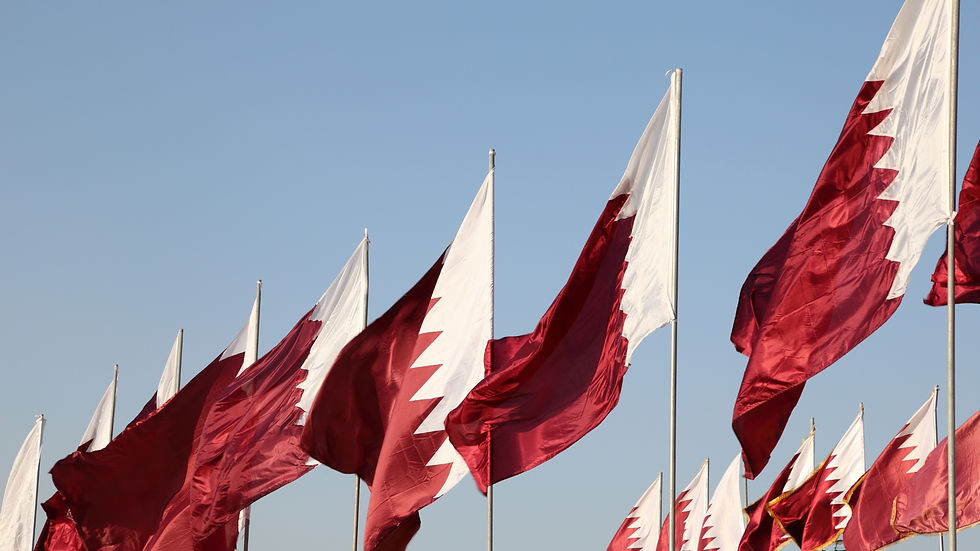
The CPAC Freedom of Speech 2025 Ratings highlight areas of the world where liberty is safeguarded or is under direct assault by repressive regimes. In its inaugural assessment, Qatar received a dismal 10% score, placing it among some of the most repressive regimes. This rating is reserved for nations that not only imprison their citizens for expressing forbidden ideas but also systematically eliminate platforms by banning independent media, a criterion that drops a country's score from 20% to 10% in the CPAC rubric.
While Qatar attempts to brand itself as open and a modern cultural and economic hub, it remains an absolute monarchy where the Al Thani family, led by Sheikh Tamim bin Hamad Al Thani, wields absolute control over the government and media. This regime will stop at nothing to censor media that is critical of or does not adhere to their repressive parameters. This grip is maintained through legislation like the 2014 Cybercrime Prevention Law, which allows the government to block any information or website that contradicts the regime’s narrative under the guise of "national safety" and "public order." By framing censorship as a security measure, Qatar criminalizes dissent and ensures that freedom of expression is treated as a threat to its power. Ultimately, Qatar’s 10% rating exposes a regime where the "safety" of the state is maintained through the systemic silencing of its people’s basic human rights.
The human cost of this repressive regime is visible in the case of Remy Rowhani, a leader of the Baha'i faith in Qatar. In August 2025, Rowhani was sentenced to five years in prison for promoting "the ideas and beliefs of a religious sect that raises doubts about the fundamental principles and teachings of the Islamic religion." Rowhani’s ordeal was marked by calculated government deception: after being convicted in absentia on a separate charge in 2021, he was falsely assured by Qatari officials that he would not be detained if he visited the country. Trusting these promises, he arrived for a short holiday in December 2024, only to be seized immediately at the Doha airport. His current conviction stems entirely from social media posts on X (formerly Twitter) that promoted the Baha'i faith, an act the judiciary characterized as undermining the state's religious foundations. This repression mirrors the religious persecution encouraged by the Iranian government, which considers Baha'is to be apostates and has been accused of pressuring Qatar, Yemen, and Egypt to adopt these same draconian, anti-Baha'i policies.
The suppression of independent media and the targeting of political and religious dissidents like Rowhani represent a fundamental violation of their human dignity. Freedom of speech is the essential check on government overreach and the only safeguard against the tyranny of the state. When a regime restricts independent journalism, it robs the public of the ability to hold power accountable, replacing organic discourse with state-sanctioned propaganda. Criminalizing forbidden ideas or labeling minority religious beliefs as "destructive" creates a culture of fear and breeds systemic injustice. Protecting the right to dissent and the existence of a free press is the only way to ensure a society remains truly free.
Read the full brief here.
Not every case of imprisonment for speech gets widespread media attention. If you are aware of a case in which a person was imprisoned for speech and received a harsher sentence than the political prisoner whom we feature in the scorecard, please send the details of the case to slaird@conservative.org. To meet our methodological criteria, the person must be 1) imprisoned or sentenced to prison for speech that would have been protected under the US first amendment, 2) a citizen of the country in which they are imprisoned, 3) received a sentence of imprisonment for at least one month OR were imprisoned without being sentenced for at least 3 months 4) not imprisoned for any actual crime during the same period for which they were sentenced for a speech crime.
CPAC vehemently opposes the views of many of the political prisoners featured in the Freedom of Speech Ratings. Political prisoners are featured in the Freedom of Speech Ratings for the purpose of revealing the state of legal Freedom of Speech protection in their countries. Political prisoners are selected based on the objective facts of their cases; each selected prisoner is the person who received the harshest sentence in that country for speech that would have been protected by the US First Amendment. CPAC stands for the right to Freedom of Speech for everyone, even people whose views we vehemently oppose.


.png)


_gif.gif)