


Sean Reyes, Elizabeth Ameling, Bill Wolf, and Karen White at CPAC’s International Summit Against Human Trafficking: Restoring Dignity to Victims and Standing with Law Enforcement

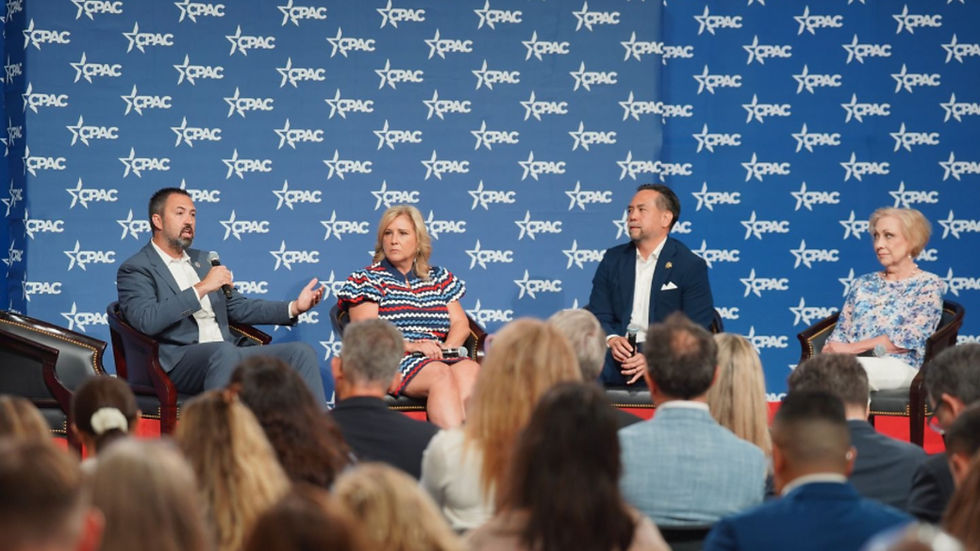
At CPAC’s 3rd annual International Summit Against Human Trafficking, a powerful panel led by moderator Bill Woolf, former law enforcement officer and investigator and current managing partner at The Woolf Group Strategic Solutions, brought together faith and legal expertise to confront the brutal realities of modern-day slavery and the urgent need for united, bipartisan, cross-sector action and victim advocacy.
Former Utah Attorney General Sean Reyes opened his remarks by thanking God and applauding CPAC’s unwavering commitment to the fight against human and child sex trafficking. “To win this fight, everyone has to be involved, because everyone is a potential victim,” Reyes said, calling for unity across city, county, state, federal, and even tribal jurisdictions, urging collaboration between the public and private sectors. “The government is not built to deal with a problem on this scale. No government agency is equipped to handle this alone. Everyone is on the same mission: to help protect and restore the dignity of victims [of trafficking].”
Karen White of the Attorney General Alliance emphasized the often-overlooked financial element of trafficking. “Money laundering is a key component of this crime—and most illicit crimes,” she stated. She highlighted that top law enforcement officials are now focusing on international training initiatives to facilitate the swift dismantling of trafficking networks at their source, effectively equipping enforcement officers from other countries, and achieving maximum impact.
Liz Ameling, founder of Latisha’s House—a faith-based residential program for adult female survivors of human sex trafficking—presented a powerful firsthand, faith-driven perspective. With each victim’s stay averaging 2.5 years, women are offered a chance to rediscover themselves. “People often don’t realize they’re being trafficked. They’ll say, ‘It’s my choice,’ but if they don’t turn over the money [to their traffickers], they’ll be killed.” She shared that many survivors arrive traumatized and fearful of testifying, concerned about not only their own but also the safety of their families. But after six months to a year of stability, care, and reconnection with faith, many find the strength to face their traffickers in court. Finally, they have the opportunity to achieve justice for themselves and prevent the trafficking of future, often underage victims.
Ameling emphasized that Latisha’s House focuses on restoring identity and dignity, not perpetuating ideology. “Sexual identity is irrelevant,” she assures, “It’s about how [the women] see themselves.”
Through seamless, interwoven dialogue, the panel sent a clear message that faith, freedom, and justice must work hand in hand to eradicate human trafficking, which can only be achieved with everyone’s dedication and collaboration.


.png)


_gif.gif)